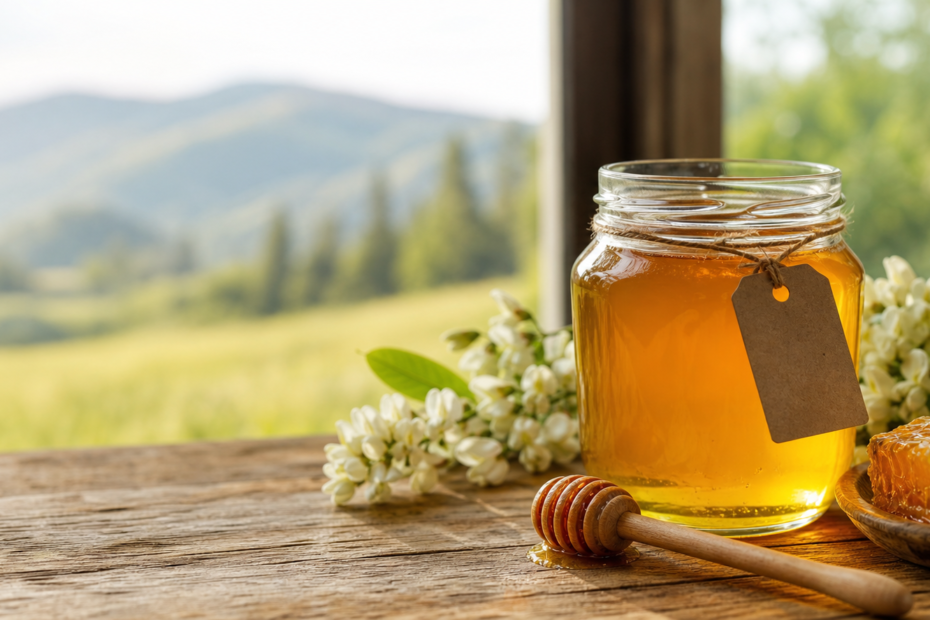
Honey authenticity has become one of the most talked-about food issues in the UK. In March 2026, the UK Government Chemist highlighted continuing concerns about honey adulteration, misleading origin claims and the difficulty of interpreting modern authenticity tests. For shoppers, the discussion raises a simple question: how can we choose honey with confidence?
The short answer is that no kitchen trick can prove whether a jar is authentic. What consumers can do is look for traceability, clear labelling, responsible sourcing and a producer who is prepared to explain where the honey comes from.
Why honey fraud is in the news again
Honey is a valuable natural food with a complex composition that changes according to flowers, landscape, climate and harvest season. That natural variation is part of its character—but it also makes authenticity testing unusually challenging.
The UK Government Chemist’s March 2026 update explains that honey fraud may include adding inexpensive sugar syrups or misrepresenting geographic or floral origin. It also cautions that laboratories and industry experts do not always agree about the interpretation of results. Sophisticated adulteration can be difficult to detect, while a legitimate honey may sometimes fall outside an incomplete reference database.
This does not mean every inexpensive or blended honey is fraudulent. It means that transparency and well-designed testing are becoming increasingly important throughout the supply chain.
What authentic honey actually means
Under the UK definition, honey is produced by bees from plant nectar or secretions. It should reach the jar as honey, with nothing added that changes its essential composition. The Food Standards Agency describes honey as a naturally complex mixture of sugars produced entirely by bees and notes that the UK has strict composition and labelling rules.
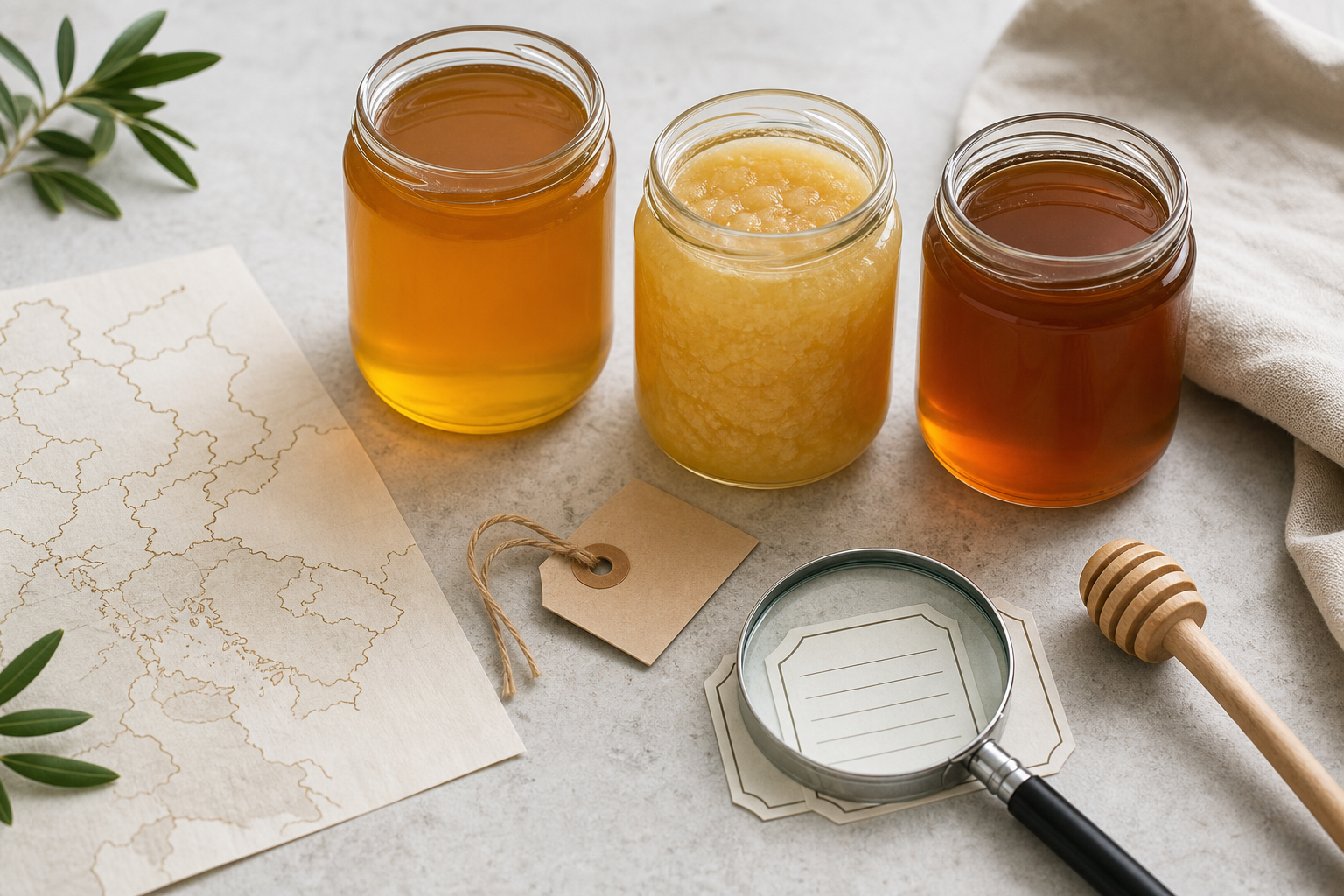
Authenticity is not the same thing as appearance. Genuine honey can be pale or dark, runny or set, mild or intensely aromatic. Acacia honey often remains liquid for longer, while polyflora honey may crystallise sooner. These differences reflect the nectar source and natural glucose-to-fructose balance.
Five practical checks shoppers can make
1. Read the origin statement carefully
Look beyond the design on the front of the jar. The label should tell you the country—or countries—of origin. A named region and producer provide more useful traceability than a broad statement covering multiple origins.
2. Look for a short ingredient list
For a jar sold simply as honey, the ingredient should be honey. Products blended with fruit, propolis or other bee products should clearly identify those additions and should not be confused with single-ingredient honey.
3. Choose sellers who explain their supply chain
A trustworthy business should be able to describe the landscape, floral source, harvest and handling of its honey. At Pure Life Source, our range is sourced from beekeepers working in and around Romania’s Eastern Carpathians—a region of forests, mountain meadows and rich spontaneous flora.
4. Treat very low prices with healthy caution
Beekeeping, harvesting, filtering, testing, packaging and transport all have real costs. Price alone cannot prove fraud, but an unusually cheap product deserves the same careful label check as any other high-value food.
5. Do not rely on viral “home tests”
Water, flame, thumb and bread tests are frequently shared online, but they cannot reliably establish authenticity. Viscosity and moisture naturally vary between honeys. Proper assessment may require several analytical methods, reliable reference samples and expert interpretation.
Why crystallisation is usually a natural process
Crystallisation is often misunderstood. It happens when glucose forms crystals in the honey. Temperature, pollen particles and floral origin can all affect how quickly it occurs. A crystallised jar is not automatically old, spoiled or fake; in many cases, it is simply behaving like a minimally processed natural product.
If you prefer liquid honey, place the closed jar in warm—not boiling—water and allow it to soften gradually. Excessive heat can change flavour and aroma. For a deeper comparison of labels, texture and common misconceptions, read our guide to natural raw honey versus imitation or adulterated honey.
What laboratory testing can—and cannot—tell us
Authenticity laboratories may examine stable isotope ratios, sugar profiles, pollen, enzymes, DNA markers or nuclear magnetic resonance data. Each approach can reveal a different part of the picture. However, honey varies naturally, and databases need high-quality reference samples covering different regions, flowers and seasons.
This is why the Government Chemist and Defra have supported work on a framework for interrogating honey-authenticity databases. The goal is not a single magic test, but better evidence, greater consistency and more transparent interpretation.
The sensible consumer position is neither panic nor blind trust: favour clear provenance, honest labelling and businesses that can answer reasonable questions about their honey.
Why single-origin and regional honey are gaining attention
Shoppers increasingly want to understand where food comes from. Regional honey can offer a more direct connection to landscape and season. It may also be easier to describe and trace than a blend assembled from many supply chains.
Romania’s Eastern Carpathians support acacia woodland, mountain flora and forest environments that produce noticeably different honey styles. Explore our raw Romanian honey collection to learn how acacia, polyflora and manna honey differ in colour, texture and flavour. Products are currently displayed for information while new stock is being prepared.
A simple honey-buying checklist
- Is the country or region of origin stated clearly?
- Is the ingredient list accurate and easy to understand?
- Does the seller explain who produces or supplies the honey?
- Are floral variety and processing claims specific rather than vague?
- Can the business answer questions about harvest, storage and traceability?
- Are health claims measured and responsible?
The bottom line
Honey fraud is a real and evolving concern, but shoppers should be cautious about sensational statistics and simplistic tests. The latest UK work emphasises stronger reference databases, transparent supply chains and careful interpretation of laboratory evidence.
For everyday buying, provenance remains one of the most useful signals available. Choose honey whose story can be followed from landscape and beekeeper to jar—and enjoy the natural variations that make each harvest distinctive.
Editorial note: This article provides general food information and does not make medical claims. Sources accessed July 2026 include the UK Government Chemist and Food Standards Agency.